Barnard’s Star
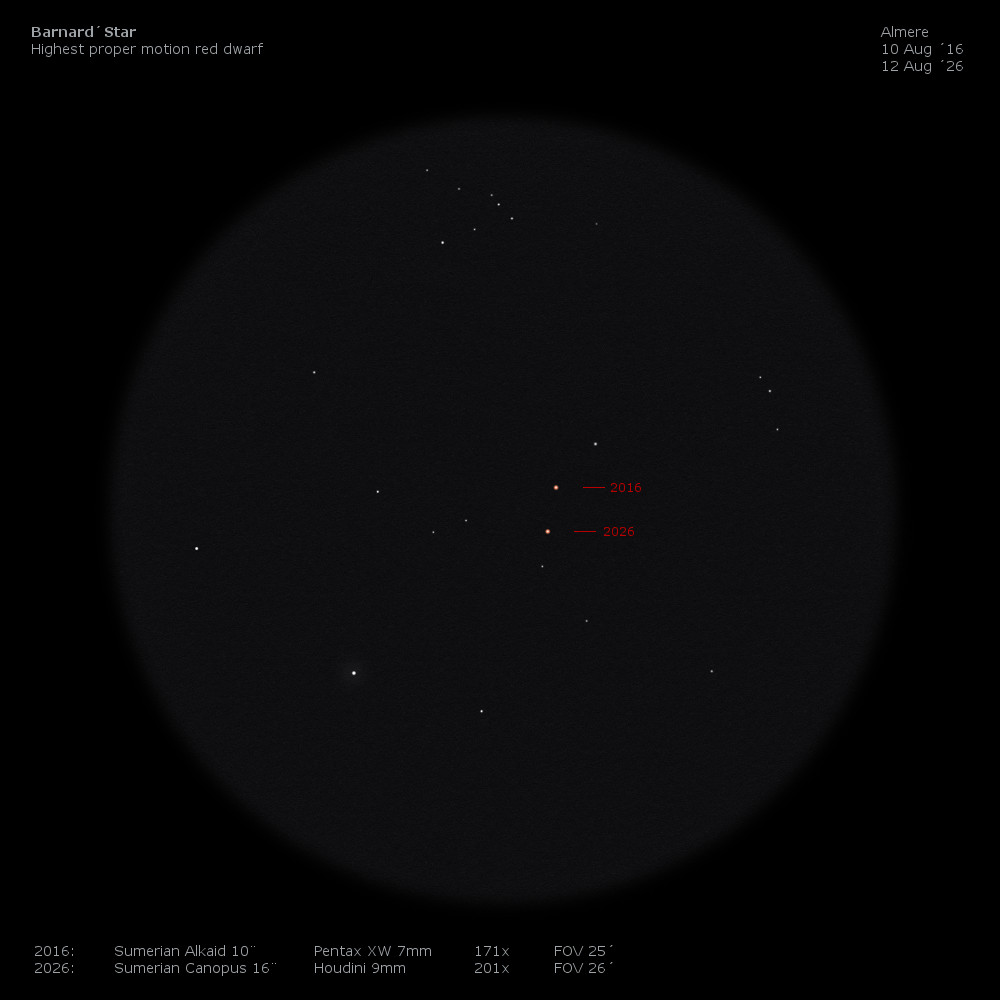
In 2016, just fresh in the hobby, I started a project to follow the movement of Barnard’s star across the sky. This star is located at only 6 light years and with that it is the closest star to our own solar system, right after the Alpha Centauri star system (4.2 LY). The intention was to visit the red dwarf every year and adding the new position to the sketch. However, new projects intervened and were prioritized and Barnard’s Star was forgotten for a long time…
But in 2026, almost exactly 10 years later I thought of it again and decided to do a revisit. The moderately bright star was found quickly and I saw a movement that was less than expected in this huge timeframe. But after checking the FOV and measuring the movement, I could indeed the confirm the known speed of 10.3 arc seconds per year.
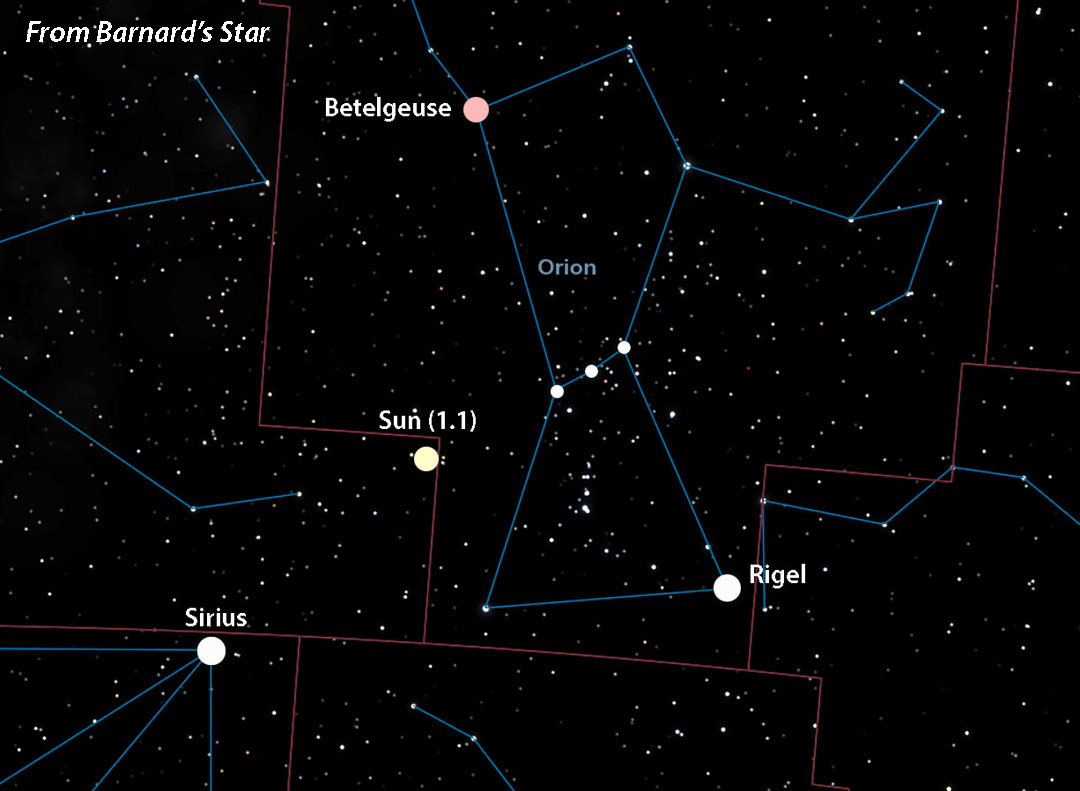
While doing the sketch, I wondered what it must be like to look up in the sky from Barnard’s star. Will the constellations look the same as from here? Apparantly I was not the only one with that question on my mind because I found an article in Sky and Telescope discussing this.
Due to the very small distance of our solar system to the red dwarf, the stars will indeed look the same (with only a very few close stars a bit out of line), but one very bright star has now entered the field, forming a beautiful asterism with our famous bright winter stars. This is of course our own sun, shining with a magnitude of 1.1 🙂
No Comments